
A word from Traverse
When we first imagined Traverse Intl, we were driven by more than the ambition to create another medical platform. A conviction drove us: Africa’s medical story has been told by others for far too long, often in a partial, inaccurate, and incomplete manner.
Across the African continent, remarkable developments are taking place in medicine. Surgeons are innovating under constraint. Researchers are observing phenomena that the rest of the world has not yet learned to see. Doctors are practicing at the intersection of combining ancestral knowledge with modern science, clinical intuition, yet these stories rarely travel beyond our borders.
Traverse was born to change that.
One of our founding dreams was to shine a light on medical advances emerging from Africa’s many hubs, and to introduce our audience, patients, practitioners, investors, and the African diaspora to the brilliant doctors quietly shaping the future of healthcare on the continent. We believe that Visibility builds confidence, confidence attracts investment, and investment drives growth.
We also believe deeply that Africa can become a medical destination, not by imitating the West, but by embracing its own specificity. A future where new technologies, modern medicine, and ancestral healing knowledge coexist is not only possible, it is necessary. Africa does not lack brains. What we have often lacked is organization, funding, and the right narrative.
This conviction led us to create The Trailblazers Blog, a long‑form series dedicated to telling the stories of African doctors whose work deserves to be known, studied, debated, and supported. These stories aren’t marketing; they are journeys of curiosity, resilience, and courage.
Why Trailblazers?
Trailblazers is more than a blog series. It is a long-term editorial and intellectual project designed to restore visibility, credibility, and confidence in African medical expertise.
We created Trailblazers after observing a persistent paradox: Africa trains exceptional doctors, surgeons, and researchers, yet their work remains largely undocumented, underfunded, and disconnected from the ecosystems that could allow it to scale. As a result, innovation often remains local, fragile, or invisible, while the continent continues to import solutions to problems it experiences most intimately.
Trailblazers Blog exists to change this dynamic.
Each chapter is conceived as a long-form intellectual encounter, allowing readers to engage not only with what African doctors do but also how they think. We deliberately privilege depth over speed, substance over spectacle, and reflection over simplification.
This platform speaks simultaneously to patients seeking trust, young practitioners seeking role models, diaspora professionals seeking reconnection, and investors and institutions seeking credible, long-term partners. By bringing these worlds into dialogue, we aim modestly but intentionally to contribute to the emergence of a stronger, more confident African medical ecosystem.
Trailblazers is also a call to action.
To philanthropists, policymakers, universities, and private-sector actors: talent already exists. What is required now is structure, funding, protection of intellectual property, and patience.
Africa does not need to prove that it can think. It needs to be listened to.
We deliberately chose to dedicate our very first chapter toDr Bayo Aluko‑Olokun, a Nigerian maxillofacial surgeon whose thinking challenges conventions and whose career embodies what it means to be a pioneer in an environment that does not always reward originality.
Dr Aluko‑Olokun often describes himself as “peculiar.” And perhaps that is precisely the point. Africa has always been peculiar, different in its rhythms, its contradictions, and its possibilities. History shows us that when Africans are given the means, our inventions and research can reshape the world as we know it.
From his work on innovative cleft‑lip repair techniques to his long‑standing research into malaria prevention through human sebum, Dr Aluko‑Olokun’s ideas invite us to look again and to think deeper. Beyond his scientific contributions, he is a profoundly humane, humble, and demanding thinker, committed to logic, philosophy, and mentorship.
Through this first Trailblazers chapter, we also issue a call to African philanthropists, investors, institutions, and policymakers to invest in medical research on the continent. Voices like Dr Aluko‑Olokun’s do not need charity; they need partnership, infrastructure, and belief.
We invite you now to step into his world, to follow the logic of his journey, and to engage with the reflections of our very first Trailblazer.
Biography – Prof Bayo Aluko-Olokun
Dr Bayo Aluko Olokun is a Nigerian facial and maxillofacial surgeon, researcher, and educator whose work bridges surgery, scientific inquiry, and public health. Known for his independent thinking, he has built a career grounded in logic, observation, and a refusal to
accept medical conventions without questioning their foundations.
Born into a family shaped by public service and intellectual rigor, his medical vocation was influenced early by figures such as Professor Emmanuel Adekeye, a pioneer of maxillofacial surgery in Africa. His own academic path, however, was marked by difficulty rather than ease, experiences that forged resilience, humility, and a deep respect for disciplined reasoning.
Prof Aluko Olokun received his specialist training in Nigeria under demanding mentorship, most notably that of Prof Ademola Abayomi Olaitan, whose apprenticeship-style guidance profoundly shaped his clinical and intellectual approach.
He later gained international exposure across Asia, Europe, and the United States, experiences that reinforced his conviction that philosophy and logic are inseparable from scientific excellence.
He is internationally recognized for co-developing the Olokun–Olaitan vermillion flap technique for unilateral cleft lip repair, a resource-efficient method designed for strong functional and aesthetic outcomes without reliance on expensive technology.
His research into the mosquito repellent properties of human facial sebum has also opened promising avenues for malaria prevention.
Committed to teaching and mentorship, Prof Aluko-Olokun continues to practice and research in Nigeria, convinced that meaningful innovation can emerge even in contexts of constraint.
His work reflects a central belief: Africa does not lack intelligence or talent, but requires sustained investment, structure, and confidence in its own thinkers.
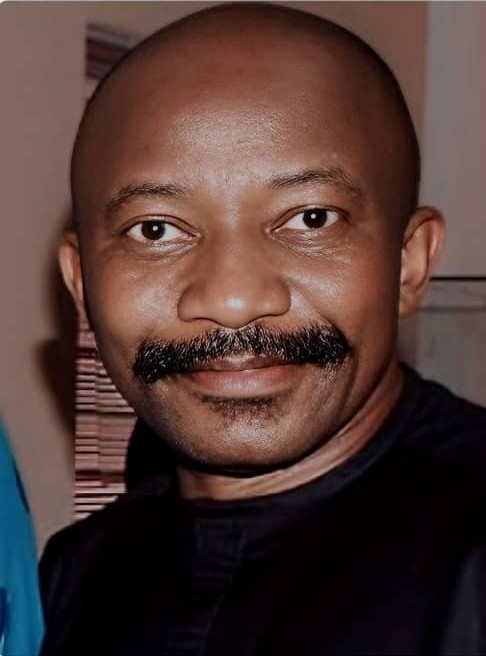
Prof Bayo Aluko-Olokun, MFR
(Member of the Order of the Federal Republic)
1 Interview with Prof Bayo Aluko-Olokun
Origins & Calling
You carry an extraordinary pedigree as a surgeon, researcher, innovator, and pioneer. From developing a new cleft-palate closure technique to contributing rare knowledge to global science, what first called you into the world of maxillofacial surgery? Was there a moment early in life that silently shaped your destiny as both healer and scientist?
Prof Bayo Aluko-Olokun
My journey into medicine began thanks to Professor Emmanuel Adekeye, husband of my mother’s colleague and close friend. I grew up around him. At the same time, my father was a very successful lawyer. My parents met while they were both studying law at university, so
intellectual rigor was always part of our household.
I was my father’s favourite child. When I was almost nine years old, I told him that I wanted to become a doctor. He immediately embraced that decision. He did not hesitate for a second.
As I progressed, however, medicine became extremely difficult for me. I worked very hard, much harder than most of my classmates, but my results did not reflect that effort.
I remember a particular biochemistry test where I scored 23%, while students who had put in little or no effort scored as high as 88%. I was discouraged and humiliated. I concluded that medicine was not worth the struggle and decided to abandon it and return to studying law.
When my father heard this, he did something unimaginable in our culture: he begged me and prostrated before me. In Africa, an elder does not prostrate before a child.
That moment shook me deeply. I could not refuse him. I had no choice but to continue. It was only then that my mother took me aside, brought me into a room, and told me the truth. In September 1965, when Nigeria was only four years old, my father had originally been admitted to study medicine. During registration, the dean assumed he was enrolling in law and asked for his credentials.
The dean then told him, “As an African, medicine will take too long. If you study law, it will take only three years, and you will be able to replace the colonial administrators who are leaving the country.” My father was young and spontaneous, and he accepted that advice.
He went on to graduate as the best student, became a Senior Advocate of Nigeria, the equivalent of the Queen’s Counsel (QC) at the time, and built an exceptional legal career.
Yet deep down, he carried a lifelong regret. My enrolling in dental surgery gave him a form of fulfillment he had never achieved himself.
I later specialised in maxillofacial surgery. That decision led me back to another extraordinary person: Professor Emmanuel Oladepo Adekeye, the same family friend I had grown up around. At the time, he was Head of Department and accepted candidates strictly on merit. I trained with him briefly, and because he was approaching retirement, he handed me over to the first surgeon he had ever trained himself, another fantastic human being.
That is Prof Ademola Abayomi Olaitan. He tolerated my excesses, and I often say that not even I would tolerate another trainee like myself. He trained me alone from 2001 to 2007.
He poured everything into me. Every single day I spent with Prof Olaitan, I returned home a
different person. Sometimes, you are not even aware of what is happening to you while it is happening. The training was deep. I came out thinking differently from everyone else.
That way of thinking explains why my research is often described as peculiar. For example, my work on human facial sebum, particularly from the nasal region, being a mosquito repellent, something that can even kill mosquitoes, led some people to accuse me of using black magic. They asked, “How did he find what the Western scientist could not find?”
I laughed. I thought to myself: What kind of mind thinks like that? The paper was accepted internationally, but those suspicions revealed more about our mindset than about the science.
The same applies to my internationally published work on the repair process of the lip. People asked, “How did nobody see this before?” That is exactly the kind of thinking my mentors trained me into: to observe what others overlook and to think outside the box.
I must also say this clearly: I was intellectually raised by Prof Olaitan, who was not only the President of the National Postgraduate Medical College of Nigeria but also the only Black man on the council of the International Maxillofacial Association at the time. Of his four biological children, he used to say that I was his firstborn. He was, again, a fantastic human being. Between Professor Adekeye and Prof Olaitan, they managed to train a pretty tough boy into a world-renowned surgeon.
I remember thinking to myself during my training: “I wish I could train someone the way he is training me.”
Today, I am proud of all my trainees. But I am particularly proud of two of them, who I believe will make me proud in exceptional ways. One of them is a brilliant woman based at Rutgers University, New Jersey, Dr Gloria Ekejiuba.
My own training method reflects what was given to me. I tell my married trainees not to get lost because of the intensity of the training. But beyond surgery, I teach a philosophy.
I teach rationality. Our educational system in Africa is not good. If we produced the same educational output as the rest of the world, the difference would be visible within one year.
The average African is not taught proper philosophy. Many people cannot even clearly explain what science is. That reality tells us exactly where we are, and why logic and rational thinking must be at the centre of medical education.
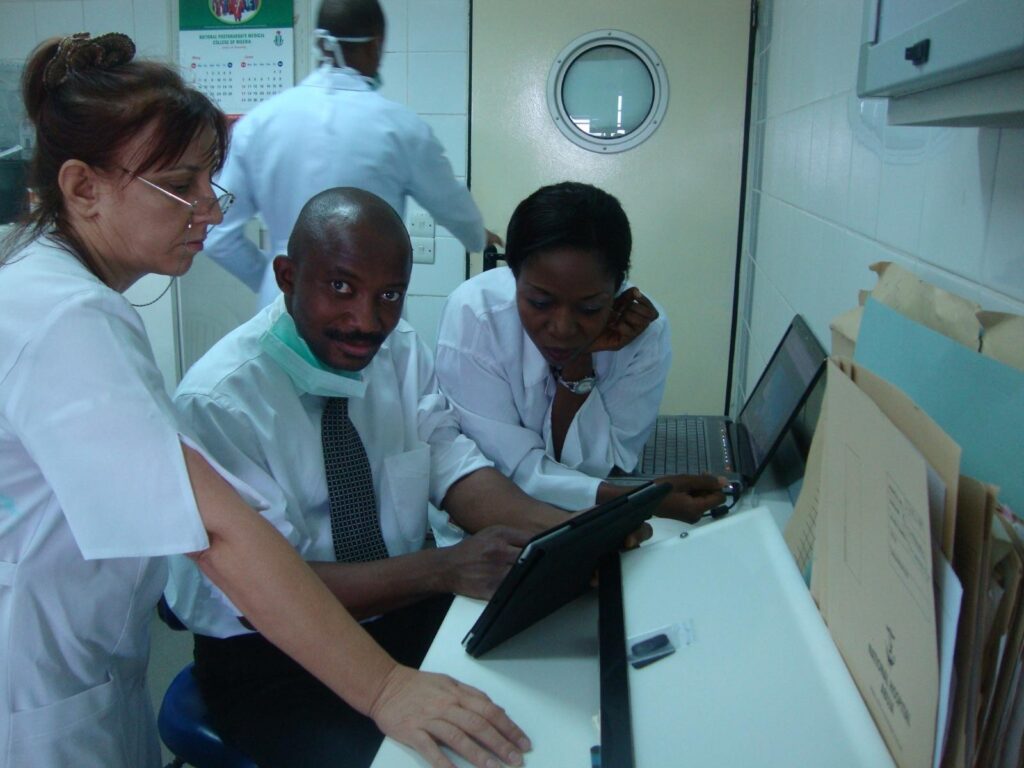
From left
1. Nurse Yulia Said Amin
2. Prof Bayo Aluko-Olokun
working as a team in Nigeria.
2 The African test of resilience
Your journey unfolded in a medical landscape where African doctors often navigate obstacles unknown to many of their global peers. Can you share one defining challenge you faced as an African medical professional, a challenge that tested you, transformed you, and ultimately strengthened your commitment to serve?
Prof Bayo Aluko-Olokun
Details
After qualifying as a consultant, I felt a strong need to expose myself to other systems, not out of inferiority, but out of intellectual curiosity. I travelled extensively across Asia, the United States, and Europe, deliberately placing myself in environments that would challenge my assumptions and stretch my thinking.
My experience in India was particularly formative. India operates under constraints that, in many ways, mirror those of Africa: high patient volumes, limited resources, and immense pressure, yet the level of discipline, focus, and intellectual seriousness I encountered there was striking. Indian doctors were deeply grounded in theory and logic, and they approached
complexity with calm precision. That experience taught me that scarcity does not excuse mediocrity. On the contrary, it demands sharper thinking.
In Asia, I encountered brilliant minds already positioning themselves strategically to dominate future global innovation. China, in particular, stood out as an example of what becomes possible when science, philosophy, discipline, and national vision align. That exposure forced me to reflect deeply on Africa’s fragmented approach to knowledge and development.
I eventually spent time in Germany, where I met Dr Karl Martin, a brother and a truly exceptional human being. He placed me with Prof Anton Dunsche in southern Germany. There, I experienced one of the most demanding periods of my professional life. I once stood in the theatre for seventeen and a half hours continuously, performing one of the most complex procedures in our field. Other doctors rotated; I did not. I needed to know that I could repeat that operation independently once I returned to Nigeria.
During that period, hundreds of students asked me questions of a depth I had rarely encountered in Africa, questions that required not memorisation, but reasoning. Because my training had been grounded in logic and philosophy, I was able to answer them clearly. That moment was transformative. It confirmed to me that logic is the backbone of science, and that Africa’s greatest weakness is not intelligence, but the lack of structured philosophical training.
These experiences strengthened my resolve to return home. They taught me that excellence
is portable; it does not depend on geography, but on discipline of mind. Africa’s challenges are real, but they are not insurmountable if we are willing to confront our limitations honestly and invest seriously in intellectual foundations.
3 Legacy & the Weight of Impact
You stand among the few Africans with eponymous surgical techniques, and your discovery of sebum’s mosquito repellent properties holds enormous promise for public health. When you reflect on your life’s work, what legacy do you hope to leave behind, as a surgeon, as a researcher, and as an African voice contributing to global scientific advancement?
Prof Bayo Aluko-Olokun
Something that has weighed on my heart for over 30 years is the staggering toll of more than one million lives lost annually to Malaria. The emergence of the Zika virus, which caused children to be born without brains, compelled me to act even further.
In 2001, I began my research, yet I still could not identify the active component, simply because Africa lacks the advanced chemistry labs required.
Since 2016, I have continued the search for the active principle, aiming for a solution that could be applied directly to the skin. If successful, it could save one million lives every year, prevent 20 million deaths over two decades, and protect children from being born brainless, as tragically occurred in Latin America. South Korea, by contrast, has made major advances in this field.
Despite the global significance of my work, no international investors have come forward to fund my research. My mosquito repellent, if commercialized, would be safe, with no injuries, no poisonings, and could potentially render existing repellents and anti-malarial drugs obsolete, even those developed by the most sophisticated labs.
Editorial Note: Today, we issue a call to African investors and philanthropists to support medical research. To get in touch with Prof. Bayo, please contact Traverse.
Imagine a world where we no longer have to be sprayed with chemicals on airplanes. This active formula is natural, produced by the human body itself, and the F&B industry can confirm that it poses no risk of toxicity. It is a genuine game-changer, yet humanity has yet to recognize its potential. Unlike DGT, a harmful chemical used in the food and beverage industry, this naturally occurring compound is safe and revolutionary.
I am not motivated by money; I am driven by the legacy of saving millions of lives. Mosquitoes are a nuisance on every continent of the world, but with this solution, a simple application once a day could transform public health globally. What an extraordinary legacy to leave behind.
4 The Sebum Revelation
Malaria remains one of Africa’s most devastating burdens. Your discovery that human facial sebum can repel mosquitoes has fascinated scientists worldwide. Can you walk us through the intuition, curiosity, or spark of insight that led you to test sebum in the first place? How do you envision this finding evolving into a real-world tool?
Prof Bayo Aluko-Olokun
Details
As a facial surgeon, I had long been fascinated by what we used to call idiopathic facial abscesses in children, those pus-filled infections on their faces. I often asked myself: Why don’t we see this in adults? Could it be that adults have some natural defense that prevents
these infections? We called these abscesses “idiopathic” because, at first, scientists didn’t understand why they occurred, and they seemed to affect only children. Yet something changes during puberty; these infections rarely appear on the face anymore.
Here’s an anecdote that shaped my thinking. I was born in the 1970s and, like many, I wore
an afro hairstyle while growing up. By the early 1980s, low cuts and shaved heads became popular in Africa. By the mid-1980s, after I shaved my head, mosquitoes started biting me on the scalp, but never again on my face, since puberty. That got me thinking: perhaps these idiopathic, pus-filled abscesses are related to mosquito bites. But how could I prove it?
I began by taking blood samples from children who had these abscesses. Interestingly, they
all had malaria. One night in 2002, I had to sleep in my car, surrounded by countless mosquitoes. On a whim, I took some of the sebum from my nose and smeared it across my
scalp. Amazingly, the mosquitoes avoided my scalp entirely. It seemed that adult sebum acted as a natural repellent.
Excited, I took the experiment further. I collected my nasal sebum, applied it to a piece of paper, and left another piece of paper untouched. When I released mosquitoes near the two pieces of paper, they avoided the one with sebum and swarmed the untreated paper. I had found a clue, but I wanted something more conclusive, and my research stayed on the shelf for five years as I sought a definitive way to prove it.
One day, I prayed and went to church, seeking inspiration. Afterwards, I opened a book I normally disliked, and there it was: the story of The Passion of the Christ. I remembered Mel Gibson’s movie: when depicting lepers covered with flies, he had applied red ice cream to look like blood. But he didn’t want artificial flies, so he put real flies into a fridge to put them into a coma. Then, when applied to the ice cream, the light from the video camera melted the ice cream, waking the poikilothermic flies, which flew off, achieving perfect coverage.
Inspired, I decided to try something similar. I placed mosquitoes into ten bottles and put them in the fridge, sending them into a temporary coma. I then set up an experiment: one paper with my nasal sebum, and one without anything. When the mosquitoes woke, the results were unmistakable: the ones exposed to the sebum avoided it entirely, confirming what I had suspected all along.
5 Collaboration & the Future of the Discovery
You developed the Olokun–Olaitan vermillion flap approach for unilateral cleft-lip repair. How do you envision the future of such African-born surgical innovations, especially in resource-limited settings?
Prof Bayo Aluko-Olokun
Details
The Olokun–Olaitan vermillion flap technique was born out of necessity, observation, and respect for tissue. It does not rely on expensive equipment, advanced technology, or imported materials. It relies on understanding anatomy deeply and working with what is already there.
The objective was always to achieve strong functional and aesthetic outcomes while remaining realistic about the environments in which most African surgeons practice. What has been most disappointing for me is not resistance from abroad; the technique has been accepted and taught in Germany, Austria, and other parts of Europe, but the limited interest it has received at home. In many African contexts, innovation is only valued once it has been validated elsewhere. This dependency on external approval remains one of our
greatest intellectual weaknesses.
I was fortunate in one critical way: my mentor encouraged me instead of suppressing my work. He did not feel threatened by originality. He refined my thoughts. That is why I insisted that the technique carry both our names. Today, my trainees demonstrate this method across Africa and Europe with excellent results. The future of African surgical innovation depends on mentorship cultures that protect ideas rather than crush them, and on systems that recognise value beyond prestige and politics.
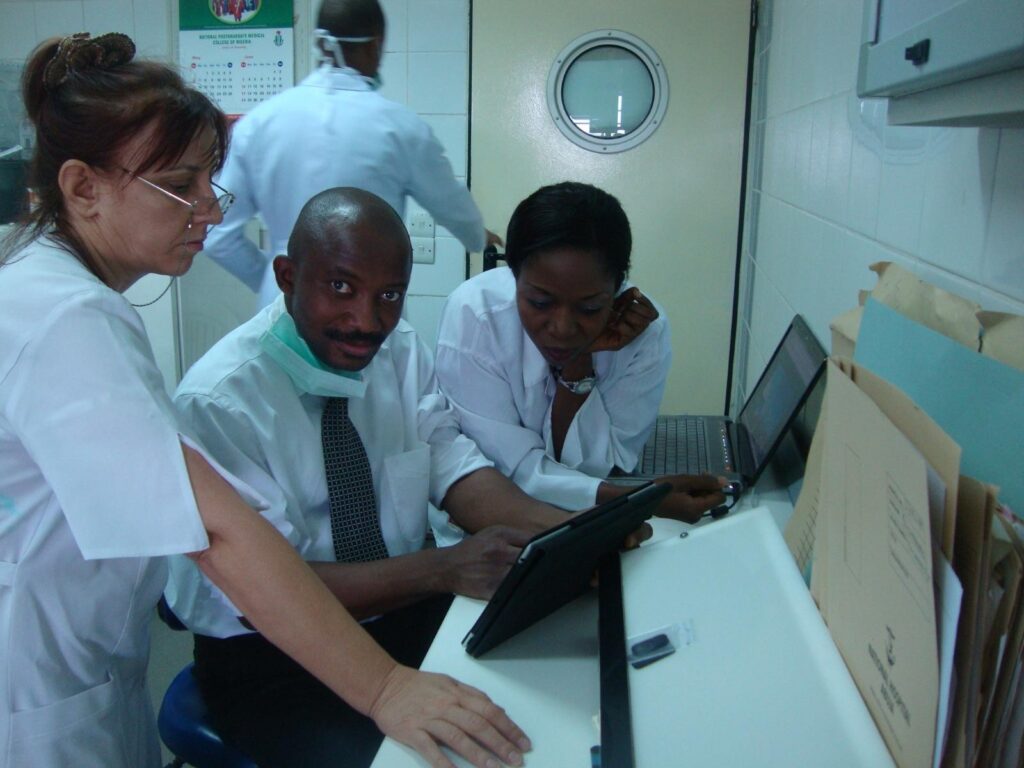
From left
1. Nurse Yulia Said Amin
2. Prof Bayo Aluko-Olokun
working as a team in Nigeria.
6 Africa’s Medical Landscape & the Question of Return
Africa continues to witness the migration of its brightest medical minds.
What message would you share with young African doctors?
Prof Bayo Aluko-Olokun
Details
My advice to young doctors is simple: be patient enough to truly learn the craft. Master the science first. Only then should you decide where you want to practice. Humanity is the same everywhere. We must be realistic; people will always migrate, and that is a reality we cannot dispute. Should we blame doctors who choose to leave? I do not think so. I myself have traveled around the world because I chose to, yet I decided to settle at home.
Many people tried to persuade me to move abroad, but I remain convinced that research could be carried out under any circumstances, whether in extreme abundance or in scarcity.
Wherever you find yourself, whether in what is called the “third world” or in a developed country, you must find a space where research is possible. You are free to go wherever you please, but your duty is to learn properly and thoroughly.
Too often, the brightest medical minds become frustrated by their environment and eventually leave. Africa has not done well; this is the truth, and we must accept it logically and honestly. If we want respect, we must change. How can you respect your neighbor if he does not put forth his best effort? Let us accept the reality: many individuals perform exceptionally well, yet their environment does not support them.
Take me as an example. My car is over twenty years old, and people complain about it. I would rather invest my resources in research. My trainees drive the most expensive cars, and I am happy for them. One of them recently bought a Mercedes Jeep. Personally, I would
not ride such a car, even if it were given to me for free. I drive a small car, and I feel safe. If
I lose it, it is fine. My Toyota Corolla is cheap to maintain. When I drive, I solve problems mentally; when I park, I write my papers. If I were to lose the car, I would feel no financial pain, no fear, no security concern.
I once had an accident. After three minutes, I left the scene, handed my keys to the other driver, and asked him to settle the matter. I needed to travel, to keep my ideas alive.
Because of this, I understand those who leave Africa, and I do not blame them. Humanity will receive them elsewhere. Some may return when Africa is ready to receive them. Or when they are determined to change Africa. As for those who stay, they must carry the responsibility of research and knowledge production.
That said, I must make a full disclosure. My aunt has been exceptionally generous. She is also the godmother of my children, all of whom are studying in North America. It is important to state this honestly. My aunt believes deeply in Africa. She served as the Minister of the Federal Capital Territory in President Goodluck Jonathan’s government, appointed in 2011. Oloye Olajumoke Akinjide was in the cabinet at the time. Many talented Africans do not have that safety net. Acknowledging privilege is part of intellectual honesty, and it is essential if we are serious about equity and reform.
7 Patient Trust & the Future of African Medicine
Many African patients travel abroad seeking care. What would you say to them? And how do you envision the future of medicine on the continent?
Prof Bayo Aluko-Olokun
Details
When we compare medical practice in Africa with that in countries such as Germany, we must do so with intellectual honesty and restraint. The goal is not to stigmatize, but to understand why outcomes and professional focus often differ.
One structural difference lies in personal and family organization. Many doctors in Germany marry later or remain unmarried for long periods, allowing near-total concentration on their work. In contrast, African doctors often navigate heavier domestic and social responsibilities. This is not a moral judgment; it is an observation. Distraction is real, and focus directly affects the quality of care patients receive.
Our cultures place great value on relationships, family, and sexuality. These are not weaknesses in themselves. However, without structure, they cannot compete with professional demands. The essential question is whether our practitioners can protect the mental space required for excellence in medicine.
I have seen this contrast firsthand. In Germany, a senior nurse in my team deliberately organized her personal life to ensure her work remained uncompromised. Her commitment translated into exceptional professionalism. In my own case, my wife, also a doctor, understands that when I am at home, I am often still working. She has shown great understanding and maturity. That alignment is rare, yet decisive.
As a scientist, I look for patterns, not excuses. My observation is that African societies must consciously design systems that accommodate our social realities rather than ignore them. Without such systems, a doctor may be mentally absent, preoccupied by personal obligations, while a patient is physically present.
This is not a condemnation of Africa, nor an idealization of Europe. It is a call for clarity. Excellence in medicine requires focus, discipline, and the ability to place the well-being of others above personal demands. If we are serious about improving healthcare outcomes, we must be willing to question not only our institutions but also the cultural structures that shape our daily lives.